The world’s second-smallest country should not, by rights, have room for gardens. Monaco has made them anyway — terraced into cliffs, layered over car parks, planted on land reclaimed from the sea — and by the state’s own accounting a remarkable share of the territory, roughly a fifth, is green space of one kind or another.
Almost all of it is free, open year-round and immaculately kept. This guide walks the essential gardens from the Rock to Fontvieille — and covers the biggest garden news in years: the reopening of the Jardin Exotique in March 2026, after six years behind scaffolding.
The cliff gardens of Saint-Martin
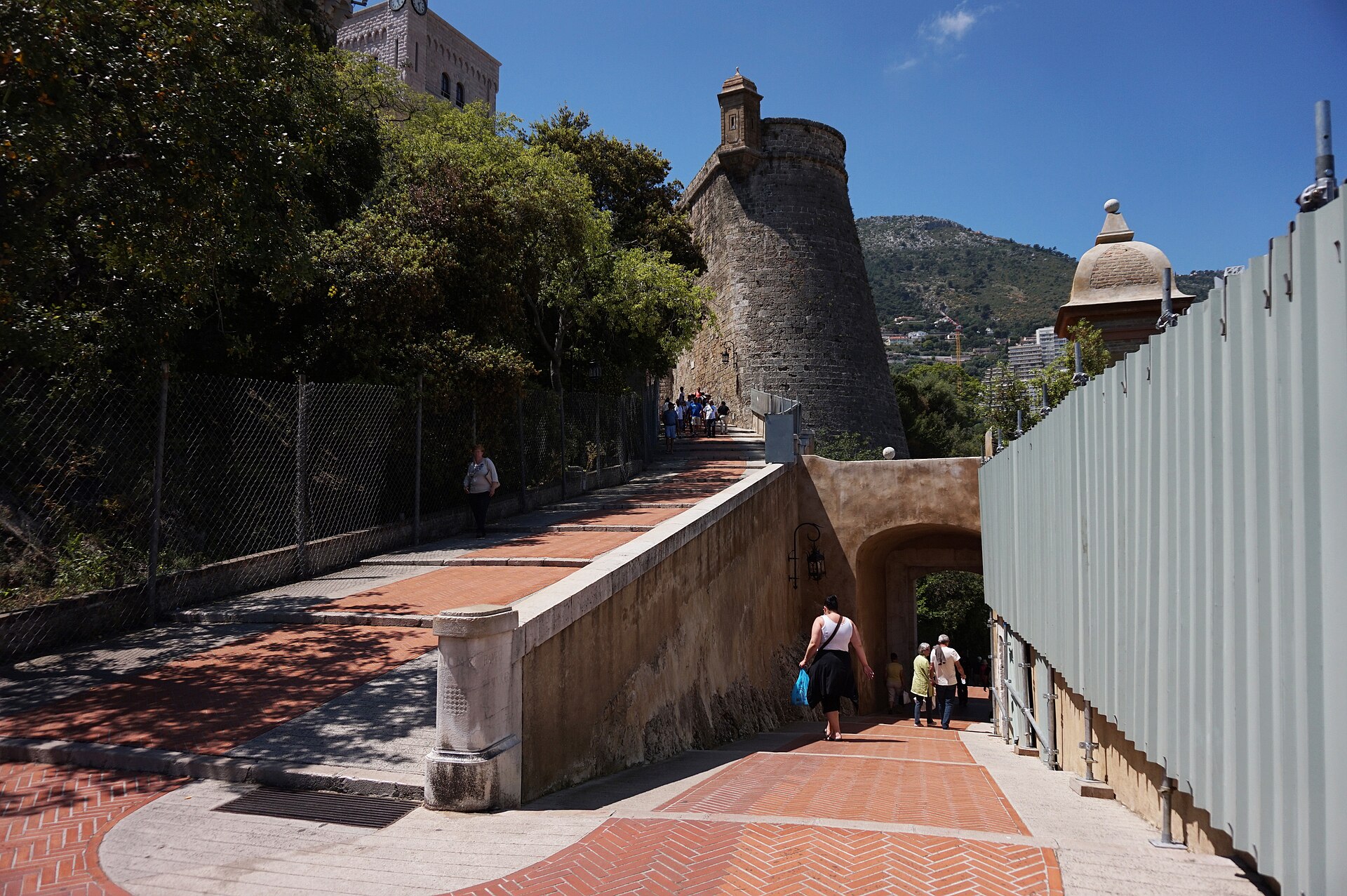
Start with the oldest. The Jardins de Saint-Martin have hung from the seaward cliffs of Monaco-Ville since the nineteenth century — the principality’s first public garden, a string of shaded paths, Aleppo pines and sculpture running along the sea wall from the cathedral to the Oceanographic Museum.
They are free, open at all hours that matter, and quietly spectacular: the paths break repeatedly onto balconies over open water, with the coast towards Italy stacked in blue layers beyond. Our Old Town Heritage Trail threads them into its route.
Places

The quiet one: the Japanese garden
On Avenue Princesse Grace, metres from the beach traffic, the Jardin Japonais is the garden most visitors walk straight past — a stylised mountain, pond and tea-house landscape designed by landscape architect Yasuo Beppu and blessed by a Shinto high priest before it was built.
It is small, free and genuinely calm: carp, clipped pines, a red bridge, the sound of water over the hum of the avenue. Ten minutes here recalibrates a Monaco day; residents use it precisely that way.
Places

Princess Grace’s roses in Fontvieille
In the Parc Paysager de Fontvieille — the big landscaped park on the district reclaimed from the sea in the 1970s — sits the garden with the strongest story: the Roseraie Princesse Grace, created by Prince Rainier III in memory of Princess Grace and planted with thousands of rose bushes across hundreds of varieties.
It is free, wheelchair- and pram-flat, and at its overwhelming best in May and June when the first flush opens. The park around it — lake, palms, lawns, the circus big top in season — is the closest thing Monaco has to a city park in the conventional sense, and our Fontvieille Discovery walk makes a morning of it.
Places


Casino-side pockets: Boulingrins and Petite Afrique
The gardens around the Place du Casino are landscaping as theatre. The Jardins des Boulingrins step down from the casino square in formal terraces of lawns and exotic planting; below them, towards the sea, the Jardin de la Petite Afrique packs palms, cycads and a waterfall into a dense subtropical pocket that earns its name.
Both are free and take minutes rather than hours — which is the point. They are the green pauses built into the Monte Carlo Glamour Walk, best taken with an espresso from the square in hand.
Places


The Jardin Exotique, reborn
The reopening that matters: the Jardin Exotique — Monaco’s famous cliff-face succulent garden, closed for renovation for some six years — reopened on 30 March 2026, inaugurated days earlier by Prince Albert II. The renovation renewed the cliff walkways, railings and lighting that made the long closure necessary, and added a children’s play area, a picnic area and a panoramic snack bar.
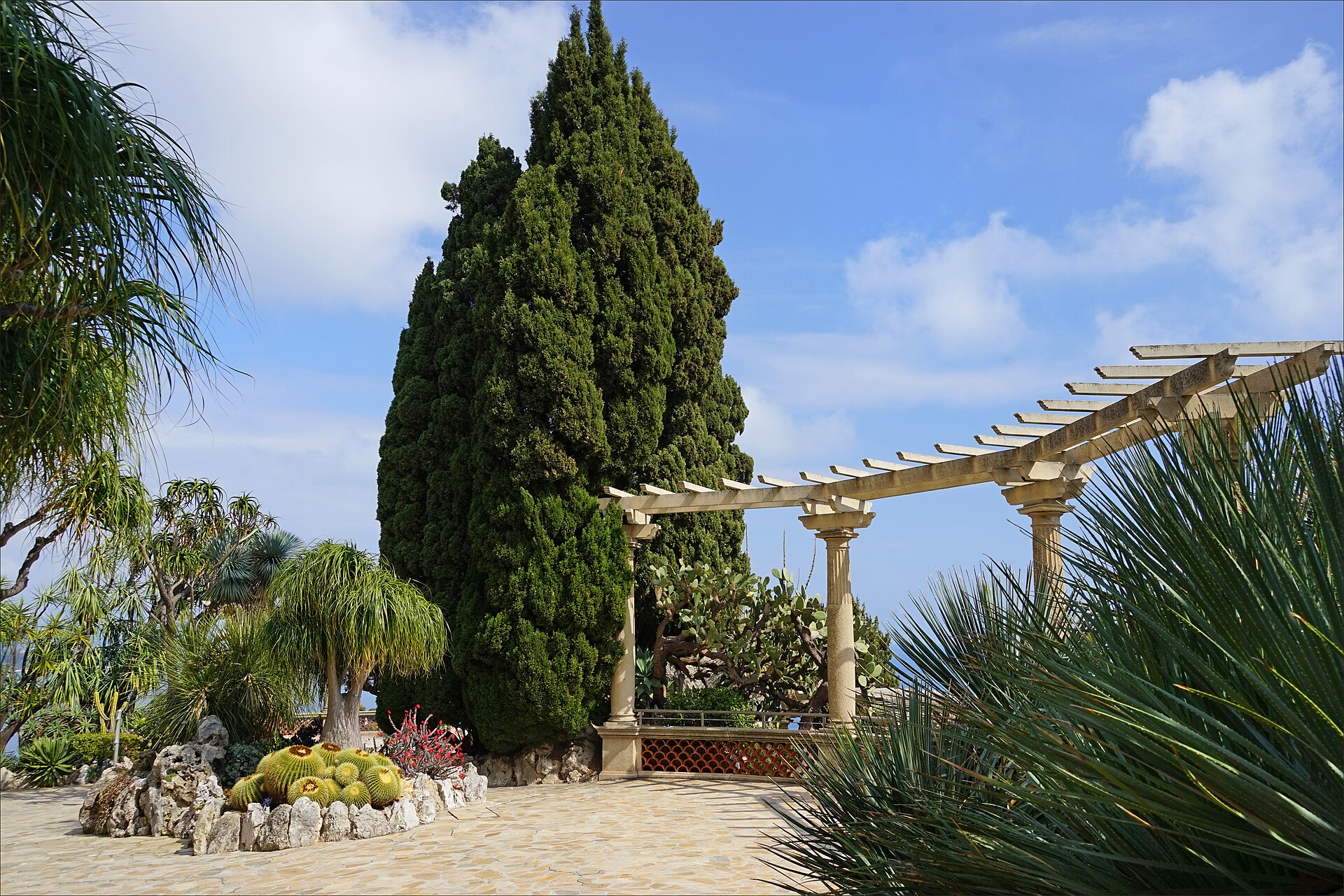
The garden itself remains what it always was: thousands of succulents and cacti, some decades old and metres tall, rooted improbably into a near-vertical cliff high on the principality’s western wall, with perhaps the best panorama in Monaco over the Rock, the port and the coast. Adult entry runs around €12 (official site); after six years away, it has returned to its place among Monaco’s essential visits.
Places

When to come
Monaco’s gardens have no off season. The climate keeps Saint-Martin, the Japanese garden and the casino terraces green and open straight through winter — one of the better arguments for a low-season visit — and the succulents of the Jardin Exotique are indifferent to the calendar.
The one date worth planning around is the roses: the Roseraie peaks in May and June. Otherwise, come whenever you are here, and come early — every garden in this guide is at its best in the first hours of the morning, before the day’s crowds and heat. For the full free-of-charge picture, see our free things to do guide.
Frequently asked questions
Are Monaco’s gardens free to visit?
Almost all of them, yes. The Jardins de Saint-Martin, the Japanese garden, the Princess Grace rose garden, the Boulingrins and the Fontvieille park are all free and open year-round. The main exception is the Jardin Exotique, which charges an entry fee of around €12 for adults.
Is the Jardin Exotique open again?
Yes. The Jardin Exotique reopened on 30 March 2026 after roughly six years of renovation, with renewed cliff walkways, new play and picnic areas and a panoramic snack bar. It had been closed to visitors since safety works began on its cliff paths.
Which Monaco garden is best for a picnic?
The Parc Paysager de Fontvieille, with its lawns and lake beside the Princess Grace rose garden, is the most comfortable spot to spread out. The Jardins de Saint-Martin offer benches with sea views for a simpler market-bag lunch, and the renovated Jardin Exotique now has a dedicated picnic area.
When do the roses bloom in Monaco?
The Roseraie Princesse Grace in Fontvieille is at its peak in May and June, when the main flush of its thousands of rose bushes opens. The garden is free and stays pleasant outside those months, but late spring is when it justifies a special trip.